Monday School: 1-16-15 Our “Spiritual Underwear” Final Week

The goal of this short study is two-fold:  first to understand more of our BASIC Methodist beliefs, and second, how to better express our beliefs to others.  We used the foundation of the Articles of Religion and the General Rules as a framework for our study.  Just as Underwear is the foundation of our clothing, usually unseen, intimate, different preferences on different people and keeps the rest of our ensemble together, so are our theological doctrines .

You can read the one-page General Rules with us by clicking here.

You can read the 2- pages of the Articles of Religion with us by clicking here.

Let me begin with my thanks to our group.  I rarely get to discuss theology at any depth and have never had as much fun as I have with YOU GUYS! 

Methodists begin by teaching the method to growing into our theological understanding.  we start with Scripture, use our God given brains to reason, reflect that with our Christian tradition and then translate into our living experience.  Add to that the fact that we are wonderfully mad as Biological, Psychological, Social and Spiritual and we look for balance in all things as we discern and discuss the words about God that we use.

THE THEOLOGICAL BALANCING ACT

We discussed our assumptions, or better our deepest beliefs, and how they color our understanding of God.  I shared mine, which are varied and admittedly overanalyzed.  Things like my role as a pastor to a community and not a congregation, the Bible as a touchstone, connection to God and people, the sacraments as a source of amazing comfort , on an on.  We encouraged to know our assumptions, non-negotiables and grow a willingness to be both “Critical and Constructive”.  See page 78-89 of the Book of Discipline.

The articles give us a language of faith but it is up to us to make them personal.   They are precisely written and intentionally placed in an order of importance.  Everything flows from God, trinitarian in our understanding, but ONE GOD.  We spent most of our time speaking of the sacraments.

The sacraments, specifically, Baptism and Holy Communion ( or the Lord’s Supper or Eucharist as you choose), are also a language of faith.  They are a doing of the story of God as Creator, Jesus as prophet, priest, King and redeemer, and the Holy Spirit as the real worker in these powerful acts of faith.  It is amazing how common touchable elements such as water, juice and bread can reach to the invisible part of ourselves and awaken our relationship with Christ.

We also discussed the five sacramental acts of worship that other Christians count as sacraments, namely-confirmation, penance, orders, matrimony, and extreme unction.  They aren’t bad, just don’t carry the weight that the Baptism and Communion do.

Each of us had stories of a time where the sacraments helped us to make sense out of something or met a spiritual need.  We had an “All Saint’s Sunday” a few weeks ago that was particularly powerful to me.  Each of us had a different take of what name we use for God when we pray.  Ultimately, the goal of any sacramental experience is to form our lives  into a living Holy Communion.

The question was asked, “how do you do that”.  This study must become more than words.  The short answer is to “attend to the ordinances of the church”, whether that is worship, study, prayer or service, in such a way that God is made real to us personally.  If God is that real to us personally then it will leak out into the lives of others.

I will not outline the 125 articles here but will point you to the link above and invite anyone of any denomination to look through them and discover your stance on the individual parts.  Please don’t stop there though.  Look at the whole of who God is and how overwhelming his love and grace is for you.  Studying these different pieces is not meant to just tickle your ears but to open your heart to a deeper working and practical walk with Jesus!

All of this and we never discussed the organizational structure once.  We will get to that on our next installment sometime after New Year’s

Next week we will take a November 23, 2015 off for the Thanksgiving holiday.  Our new study will be announced soon.   All are welcome to join in the study at any time on Mondays at 6:00.   Everyone is welcome to add with a comment on the doctrinal statements below.

Click here to check out our main website!

logo 1

Thank you Captain Underpants for adding a little humor to a serious subject. 

Monday School: Our Theological Underwear as United Methodist; First of Two Weeks

Underwear is the foundation of our clothing.  It is usually unseen, intimate, different preferences on different people and keeps the rest of our ensemble together.  Our theological doctrines do the same thing.  They hold us together and serve as  the foundation of the ways that we speak of God.  They are usually unseen, intimate and  more assumed than taught.  Now and then a disciple needs to get down to the basics.  This week our group will put our core teachings right out in the open and studied them together.  In our United Methodist context, these are found in the General Rules and the Articles of Religion.   The goal is two-fold:  first to understand more of our BASIC Methodist beliefs, and second, how to better express our beliefs to others

You can read the one-page General Rules with us by clicking here.

You can read the 2- pages of the Articles of Religion with us by clicking here.

Our small group meets for 90 minutes each Monday at 6:00 we began by discussing how we “do” theology.  Methodists teach that there is a process to growing into our theological understanding.  we start with Scripture, use our God given brains to reason, reflect that with our Christian tradition and then translate into our living experience.

We discussed at length the three General Rules to Do no harm, do good and attend to the spiritual practices that lead us to God.  Many stories of how God had gotten our attention were shared from our diverse group.  We discovered that while these rules are Methodist and Wesleyan they are basic to any Christian of any background because they come directly from the Gospel .  Everything starts with grace.

I shared two things that boil my blood when people feel obligated to tell me what a Methodist is.  The first is when they tell me that we don’t believe in the Bible and don’t actually have any doctrine.  Second that we are about salvation by good works.  Teaching, learning and witnessing to our theological heritage is the antidote to this whenever, “Two or more are gathered.”

The question was asked if these two statements were meant to replace Bible study.  A great question but our answer was a definite NO!  The doctrinal statements flow from scripture but cannot replace scriptures role in the life of piety.  Searching the Scripture is central to the method of Methodism.  We are seeking God’s perspective.  One of our number shared that it was through prayer and Bible study that they were able to give a difficult thing up to God.  This led to the discover that “God, turns out, could do much better with things than I could anyway.”

We read through the first 5 of the Articles and will probably finish next week.  They are precisely written and intentionally placed in an order of importance.  Everything flows from God, trinitarian in our understanding, but ONE GOD.  Before we could subdivide the doctrines we must be in complete agreement of one God who is the source of forgiveness and gives us the living resurrection in Jesus Christ.  We also discussed the sufficiency of Scripture and what that means to our salvation.  While scripture does not directly speak to every single thing, it contains our sufficient road map to being and living as saved Christian disciples.

Wonderful things happen when we study our own doctrine and discover a solid place to find ourselves in Christ.  Our discussion was definitely Weslayan and United Methodist in scope, however, these things are so basic and scripturally driven that they can be applied to most any thoughtful Christian.

Next week we continue with the articles of religion.  You are welcome to join in or read along from where you are.  We will read them one at a time and find the thread of Jesus’ grace and the Holy Spirit that ties them all together.    All are welcome to join in the study at any time on Mondays at 6:00.   Everyone is welcome to add with a comment on the doctrinal statements below.

Click here to check out our main website!

logo 1

Thank you Captain Underpants for adding a little humor to a serious subject. 

Good Question………………..

This Sunday is November 1 or “All Saint’s Sunday”, when we remember those in our lives who have passed away.  The question of the day asked by a friend is, “who says we have to do All Saint’s day, Advent, Lent and all of that?  Do we have to?”  How do you figure these dates out?

These are traditional special days and seasons of the “church year”.  These things are not necessarily from scripture but come from centuries of tradition.  Nope, as United Methodists we are not obligated to follow them though some denominations are more strict.

I follow it for three main reasons.  First, it connects me with the whole of the  Bible’s story from Genesis to Revelation with some order.  Second, it connects me with the whole of the church, God’s people, as we journey through the scripture together.  And finally, it is a good discipline. I follow the 3-year cycle of the “Revised common Lectionary, about 90% of the time to keep me from just preaching the passages I like-In other words, following the church year keeps me better grounded and less centered on my pet passages. 

The Christian year begins with Advent-4 Sunday before Christmas and Christmas eve celebration of ‘hope’, ‘faith’, ‘joy’, ‘love’ and completion.  Count the “12 Days of Christmas” after December 25 to connect us to  the journey of the wise men bringing gifts to Jesus on “Epiphany”, January 6-Many Christians open their gifts on Epiphany.  “Lent” connects us to the story of Christ in the desert of temptation for 40 days.

You first calculate Easter to coincide with Passover-The Sunday after the full moon on or after the spring equinox (considered to be March 21), then count back 50 days and that will give you Ash Wednesday with a smudge which is Lent’s opening day.  This is a traditional time for Baptisms!

After Easter we journey to Pentecost Sunday, which happened on the Jewish Holiday 50 Days after Passover.  After that we have “common” or “ordinary” time until we start again on the first Sunday of Advent.  Following this outline injects the story of the Holy Bible into our daily lives and helps make it a living reality and not just an academic study.

That’s it in a very brief paragraph.  Even though we aren’t obligated to follow it, the church year, liturgical year, the lectionary, or whatever you want to call it, gives us a structure that reflects the witness of schripture and connects us to it.  The bottom line is not keeping all of these special days but keeping the spiritual journey with Jesus.  Scores of traditions have been attached to all of the special days but the common thread is to meet and grow in His grace.

It is more than Bunnies and decorated trees!

Sermon Brief: October 4, 2015 “Tell Them the I AM sent You”


Slide1

Before health education and restrictions on the tobacco industry nearly everyone smoked . People who did not smoke often carried light to share for others as a courtesy.  As a kid, I was fixated on the Zippo Lighter.  They clicked, flicked and snapped into a flame that did not consume the fibers in the center of the little chrome grid. This was cool and weird at the same time, just like the “burning bush” that confronted Moses.  God had a mission and a direction for Moses.  He had a cool-weird Zippo lighter moment and had the presence of mind to listen and follow.

Our smoking habits have changed.  Lighters are not as commonplace BUT  Jesus is still the way, the truth and the life.  He is the God of all creation and that does not change with the whims of culture.  God is the source of direction for our lives.  Even when we lose our way, God is still speaking to his people.  The greater question is, are we listening?

Click here for our Sermon Text: Exodus 3:1-15

Here are some of the high points:

  • Moses has lost his way.  Born into hiding, prayed into being a prince of the most powerful nation in history. He had everything all figured out until he killed a man.
  • He fled Egypt at about age 40, he could be 70- or 80 years old, trapped in the sheep business. His direction is to water and pasture for the sheep. The Big picture direction of his life was lost
  • God called through an angle in the guise of a fire. Like a zippo, the flame is alive with sound sight and the very voice of God but it is not consumed This is a holy moment on a holy patch of ground.
  • The message: GO to Egypt, bring the message of victory and release, deliver them. Your marching orders, your credentials and your provision is simply from “I AM. Tell them I AM sent you.  This is a derivation of the Yahweh, the name of God.  They would understand.
  • There is no question that this burning bush moment is God’s direction, authority, and provision.  He may question his sanity or his faith but this is to far out there to be anything less than God.  He shows more than a little doubt of self or his ability but the mission is all there.

Wouldn’t you and I have a less anxious life if we followed God’s clear direction with such surefootedness.

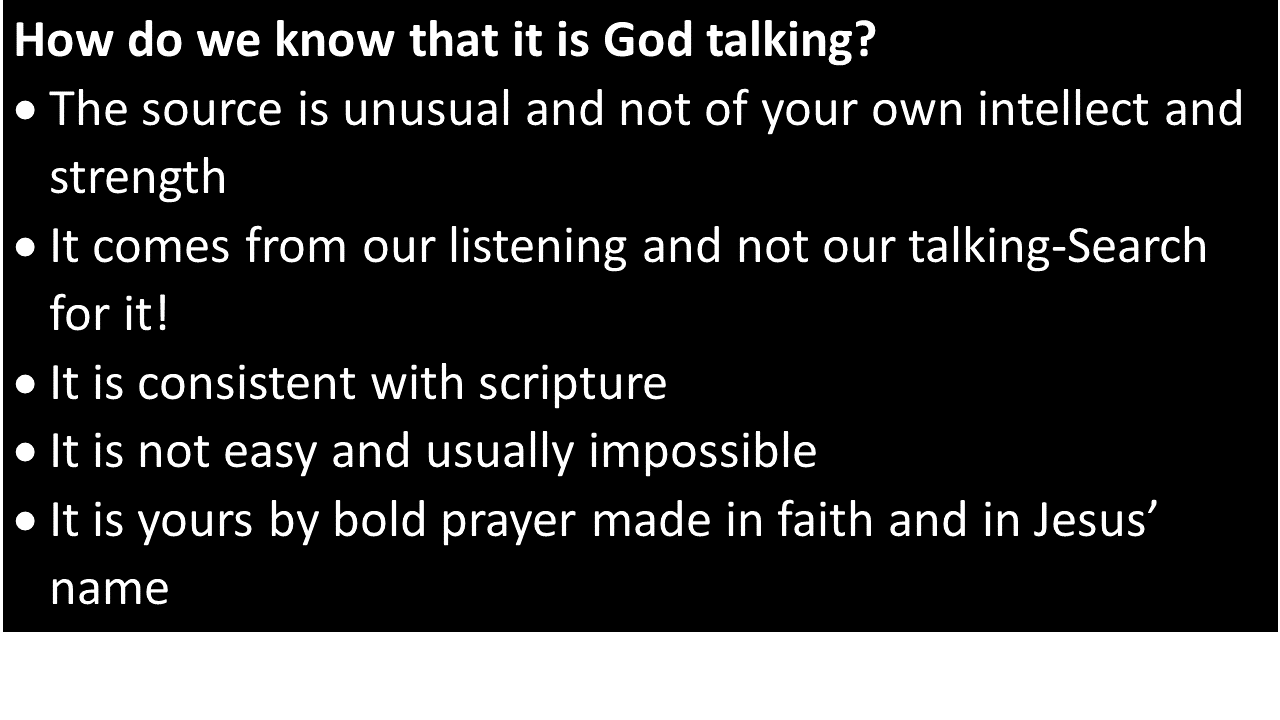
A young man that is now a certified lay minister and holding down a church asked me a question.  We were have a parking lot conversation with another pastor who was accustomed to saying “God told me” this and that, whether choosing a song, sermon, or a car.  He often spoke this way and  I knew him as a man of God committed to the Gospel and prayer.  The young lay pastor  was quiet in this conversation as our neighbor was telling us what God had told him to do.  After this pastor left, my friend quietly asked.  “Brother Joe hears from God?  How does he know its God and not someone else?”  This is a great question .

Moses has some hints for listening for God’s voice in this story.  I have never heard Charlton Heston’s voice booming a message out of the rafters or had writing magically appear on the wall but I hear God’s voice in my spirit. Many of my friends and colleagues have been re- assured of their life’s direction in many different ways.  How do we hear?  How do we know it isn’t a misleading voice?

Good questions!  People are dying from a lack of direction. Suicide, depression, missed opportunities, lost wages to unproductivity burden us when we lose our direction and flounder in our faith.  It can all be crushed by simply knowing and following God’s direction by faith.  Before you get too excited though, God makes us work for it and we will battle with doubt most of the way!

We are seldom blessed with an angelic and fiery message.  We live by faith and not sight.   God’s message is subtle, silent and sure we have to listen for it.  Consider these when you are discerning your life-direction.

Slide2

Walking in faith and seeking God’s direction begins when we pay attention to God in your everyday life, create time and place for prayer, know your own story.  The light of Christ is your, portable, powerful and shareable.  Jesus isn’t I was or the I will be he is the ever present and eternal “I AM”.  Jesus is your portable, powerful, eternal and living flame.  Carry it well and share!

You have the authority, God has the direction for you!  I AM knows you by name

 logo 1

Click here for our website

Thoughts from the Back Porch: A work in progress…

IMG_5182

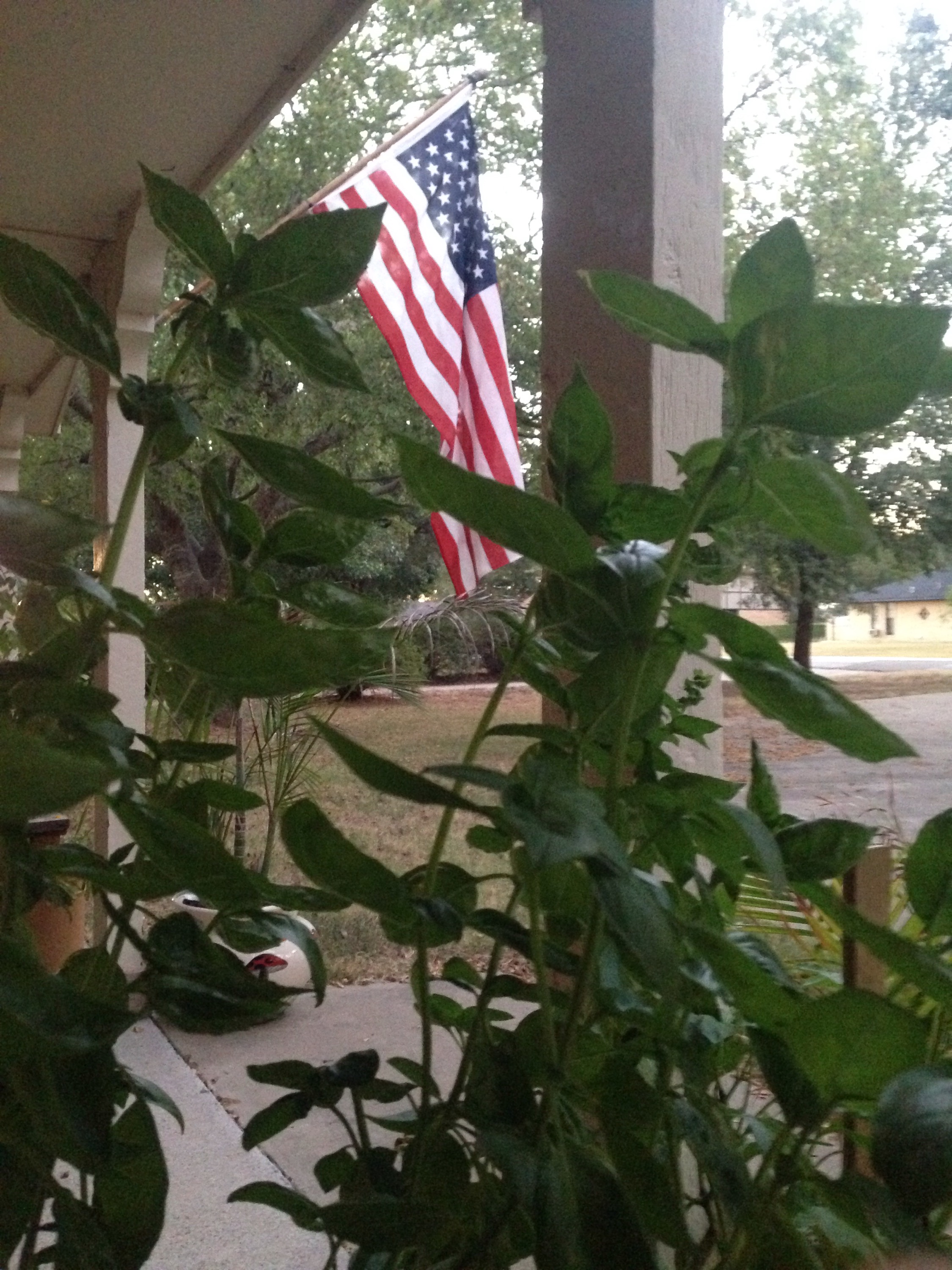
The view from the porch

This is a book outline and a work in  progress.    The hope is to describe a way to grow closer to God and, as a result, have a less anxious and more fulfilling life through establishing a sacred space and time to train your body and mind to be aware of God’s presence.  My example of this is my back porch.

Everyone needs a back porch.  This is any place of solitude where you can shake photo_4off the world’s garbage and think God sized thoughts. Mine is actually my back porch, complete with a desk and prayer benches. It is my “Friday office”.  It is where I write and study on my off days. Yours might be anywhere but if you don’t have a sacred space of your own, I hope this blog can be your back porch and provide you a safe starting place to seek God.  The ultimate goal of this exercise is to recognize God wherever we are.
Follow along and comment where you wish and see where this goes.  Better yet, apply the principles and watch your awareness of God grow.

Read it and use it thoughtfully but remember, “Thou shalt not steal”.

Copyright Alan Van Hooser 2015, so there.

Thoughts From the Back Porch: October 1, 2015

  This is the view from my back porch, my sacred spot. This is where I feel closest to God and can separate for a few quiet minutes each day. I Hope you have a sacred spot and find your time with God today. It makes a life of difference. Here’s whats on my heart today………

Just past the full of the “Blue Corn Moon”

Establish your sacred space out of doors whenever possible.  I am blessed to have a large yard that backs up to a wooded property to charge me up with calm. This is the view from the space that is engineered to center me on God  Dawn and dusk provide the best time for me to be immersed in  the presence of God.   Amazing things happen as God creates a new day right before your eyes.
This morning is dark, 60 degrees and silent. No air conditioners or wind interrupt the stillness. The only traffic is from farm workers and night shift-ers. I hear my first flock of geese for the year fly overhead. The only light is the full moon hanging high but still they cannot be seen. In that moment the unseen Creator is as real as those unseen geese

IMG_5580

The early risers go about their day

My scripture meditation is Exodus 3-Moses and his angelic messenger found in the burning bush. There is a difference between being still and simply being outside.  Moses, the prince of Egypt and convicted murderer, was now a humble hired son-in-law working at the family sheep business. His wandering was God ordained and went on for many years. However, when the voice of God spoke through this angel, he recognized both the speaker and the holiness of this place.

Moses was on Mr. Horeb, the mountain of God!  A sacred space set aside for the spiritual searcher. How many other hired men might have grumbled about their work all self absorbed and missed this moment with God almighty?   Did it take more than one try to get Moses to notice?   After so long Moses was blinded by self pity and poor self esteem, as suggested in  Verse 11 suggests.   It would be easy to lose sight of God in the midst of it all.
How many of my neighbor’s this morning  rushed out and missed this sacred time and the connection of  the invisible honking geese with the majesty of God?  How many bad days could be avoided by a mere 15 minutes of intentional stillness.   God brought Moses to that moment and changed his world.  Where will God meet you today and change yours?

IMG_5589My sacred spot  is a covered porch but yours could be a hammock, car or a spot near a window. I keep plants to nurture in my sacred spot, you might choose to surround yourself with icons, artwork or a place to write or study instead.  A bench in a public park can be as holy as a pew in a sanctuary.

Actively Seek your space and surround yourself with things that point you to God.  Rise a little early and intentionally give God some time-as little as 15 minutes make a difference.

Search your Bible and other books for those images and activities that lead you to true prayer.  The ultimate life skill in these matters if to craft your sacred spot wherever you are standing.

The point of this is not what you do in your sacred space but what being in that sacred space does to you.

c. Alan Van Hooser 2015